
Why Do We Celebrate Nag Panchami?
A Day to Worship the Sacred Snakes in Hinduism
🐍 What is Nag Panchami?
Nag Panchami is a Hindu festival when people worship snakes (called Naag). It is celebrated on the fifth day (Panchami) of the Shravan month (July–August), during the rainy season.
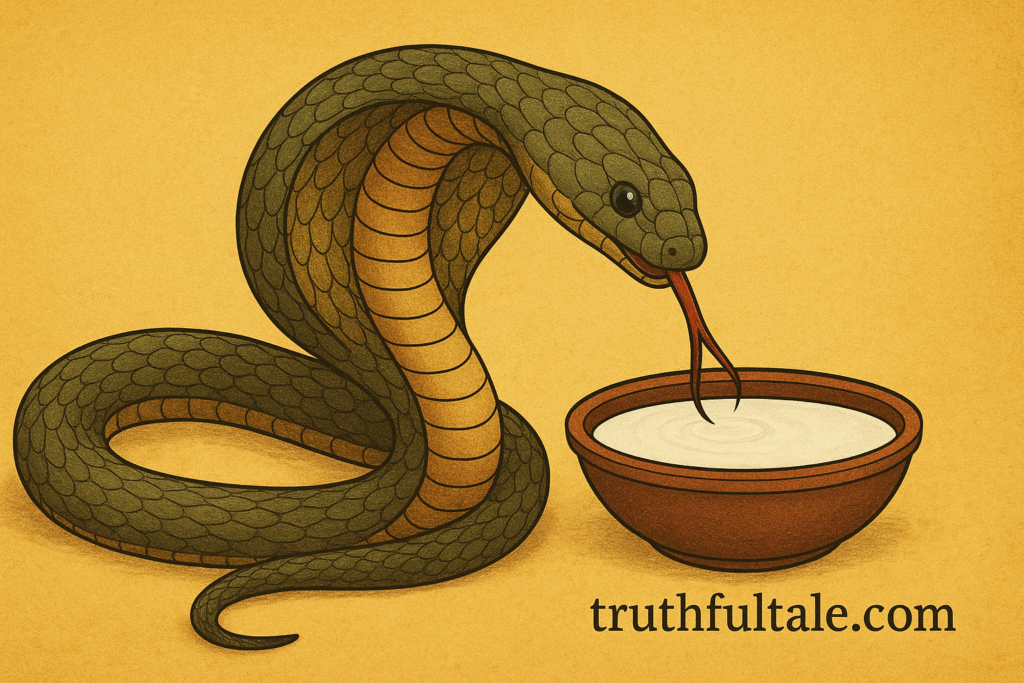
On this day, people pray to snakes, offer milk, and ask for protection from snakebites and bad luck. But why do we worship snakes? Is there a story behind this?
Let’s find out.
🐍 Did You Know?
The word ‘Nag’ means snake in Sanskrit, and ‘Panchami’ means the fifth day. So Nag Panchami simply means the fifth day for snake worship!

Stories and Gods Connected to Nag Panchami
Lord Shiva and Vasuki Naag
Lord Shiva, one of the main gods in Hinduism, wears a snake named Vasuki around his neck. This shows that Shiva has no fear and controls even dangerous things like poison.
People believe that if we pray to snakes, it makes Lord Shiva happy, and he protects us from harm.
2.Lord Krishna and Kaliya Naag
When Lord Krishna was a child, a dangerous snake named Kaliya lived in the Yamuna River and made the water poisonous. Krishna jumped into the river, danced on the snake’s head, and defeated him.
Krishna didn’t kill the snake but told him to leave the river. People remember this event during Nag Panchami as a sign of good winning over evil.
3.Astika Muni and the Saving of Snakes
Long ago, a king named Janamejaya wanted to kill all snakes in a big fire sacrifice. A young boy named Astika Muni, who was half-human and half-naga, stopped the king.
This also happened on Panchami, and from that day, people started celebrating Nag Panchami to honor snakes and Astika Muni.
🕉️ What Does It Mean Spiritually?
In Hindu belief, snakes are very powerful and sacred.
They are connected to Kundalini Shakti – a hidden spiritual energy inside every person.
Worshipping snakes means respecting nature, energy, and life.
📜 History Behind the Festival
In olden times, people lived close to nature. Snakes helped farmers by eating rats and insects from their fields. During the monsoon, snakes come out of their homes due to rain, so people began to worship them to stay safe and peaceful.
This practice became the festival of Nag Panchami.
Rituals and Observances
Idols or images of snakes are worshipped with milk, haldi-kumkum, and flowers.
Ant-hills, where snakes reside, are also venerated.
In some regions, live snakes are bathed and worshipped by trained snake charmers.
Devotees observe fasting, chant Nag mantras, and visit Shiva temples.
🔱 Gods and Deities Associated with Nag Panchami
Deity | Relation to Snakes |
Lord Shiva | Wears Vasuki around neck; protector of Nagas |
Lord Krishna | Defeated Kaliya Naag; symbol of victory over ego |
Manasa Devi | Snake Goddess; worshipped for protection from snakebite |
Astika Muni | Savior of the Nagas from the snake sacrifice |
Sheshnag | Cosmic serpent; bed of Lord Vishnu |
In Simple Words…
Nag Panchami is not just about snakes—it is about respecting life, nature, and ancient wisdom. It teaches us that even creatures we fear can be sacred and powerful.
By worshipping snakes, we also show our faith in gods like Shiva and Krishna, and we pray for peace, health, and protection.