
Sleeping Hanuman ji: The Peaceful Form of Bajrang Bali
Hanuman Ji, also called Bajrang Bali, Pavan Putra, and Anjaneya, is revered for his unmatched strength, unwavering devotion, and eternal service to Lord Rama. Across India and beyond, Hanuman Ji is worshipped in many forms — as a child (Bal Hanuman), as the mighty warrior carrying the Dronagiri mountain, as the flying messenger, or as the humble servant with folded hands.
But among these forms, Lete Hanuman Ji, or Shayan Hanuman, holds a special and rare place. In this form, Hanuman Ji is seen lying down peacefully, as if in deep meditation or divine rest, after completing his tireless acts of devotion. This posture inspires awe and devotion in equal measure, as it reminds us of the balance between action and rest, strength and humility, power and peace.
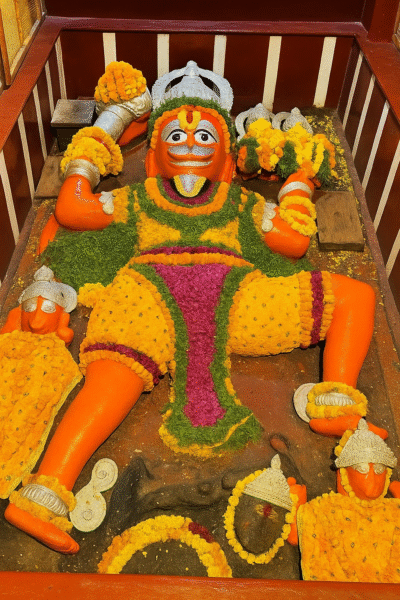
✨ Symbolism of Lete Hanuman Ji
The reclining form of Hanuman Ji is much more than a rare posture; it is filled with deep spiritual symbolism:
✅ The Ultimate Rest After Seva: Lete Hanuman Ji teaches that even the mightiest soul must rest after performing their duty. This rest is not laziness, but a well-deserved pause in the journey of service.
✅ Oneness with Nature: Especially at Prayagraj, where the idol gets submerged by Ganga waters during monsoons, Hanuman Ji in this form symbolizes unity with nature and surrender to cosmic forces.
✅ Surrender and Devotion: Even while lying down, Hanuman Ji’s heart and mind are immersed in the name of Shri Ram. His rest is not ordinary sleep, but yogic rest — a state where the body rests, but the soul remains awake in devotion.
✅ Protection in Every State: Whether awake, active, or resting, Hanuman Ji is always the protector of devotees, watching over them with compassion and strength.
🏯 The Temple Significance
The most famous shrine dedicated to Lete Hanuman Ji is at Prayagraj (Allahabad), Uttar Pradesh, near the confluence of the Ganga, Yamuna, and invisible Saraswati rivers — the sacred Triveni Sangam.
- The idol is massive — about 20 feet long — carved in stone, lying in a chamber slightly below ground level.
- During the monsoon, when the Ganga rises, the waters lovingly cover Hanuman Ji’s body, as if the river herself is offering abhishek (holy bath).
- The sight of the submerged Hanuman Ji is considered extremely auspicious and draws thousands of devotees.
Other temples of reclining Hanuman can be found in:
🌸 Varanasi — where the form is associated with deep meditation.
🌸 Khajuraho — where an ancient Lete Hanuman idol shows the continuity of this form since centuries.
📖 Historical and Cultural Context
Antiquity of the Idol: The Prayagraj Lete Hanuman idol is believed to date back to early medieval times. Some link its installation to Adi Shankaracharya or local kings who built the temple for protection of the Sangam area.
Connection to Saints: Tulsidas, the great poet-saint and author of Ramcharitmanas, is said to have worshipped at this site during his stay in Prayagraj.
Cultural Role: Wrestlers (pehelwans) and akhara disciples see Hanuman Ji in this form as a guardian of strength, stamina, and humility. They often seek his blessings before competitions.
🌼 Rituals and Worship Practices
✨ Sindoor and Oil Offering: Devotees apply sindoor (vermilion) mixed with oil on Hanuman Ji’s body — a ritual believed to ward off evil and bring strength.
✨ Bhajan and Kirtan: On Tuesdays and Saturdays, temples of Lete Hanuman Ji resound with Hanuman Chalisa, Sundar Kand, and Ram bhajans.
✨ Darshan During Monsoon: The submerged darshan of Hanuman Ji at Sangam is considered very powerful — people believe it washes away sins and brings peace.
✨ Special Pujas: On Hanuman Jayanti, Ram Navami, and Navratri, special pujas are held, and prasad of boondi, laddoo, and chana is distributed.
🎉 Festivals & Rituals
✨ Hanuman Jayanti — The temple of Lete Hanuman Ji sees grand celebrations on Hanuman Jayanti with special aartis, bhajan kirtans, and distribution of laddoo and boondi prasad.
✨ Akharas (wrestling arenas) — Wrestlers and bodybuilders often visit these temples, seeking blessings for strength, discipline, and humility.
✨ Ritual Bath — In Prayagraj, devotees consider it auspicious to bathe in Sangam waters and then offer prayers to Lete Hanuman Ji.
👑 Special Beliefs
🕉 It is said that darshan of Lete Hanuman Ji before any important task brings strength and success.
🕉 During floods, when the idol at Prayagraj gets submerged, it is seen as a blessing — the Lord allowing the sacred Ganga to wash over him.
🕉 Offering sindoor (vermilion) and oil is considered especially auspicious here.
🙌 Conclusion
The form of Lete Hanuman Ji reminds us that true strength lies in devotion, true peace lies in service, and true power lies in surrender to the Divine Will. When you bow before Lete Hanuman Ji, you are not just praying to a resting figure — you are connecting to the eternal energy that protects, serves, and loves all beings.
ypnepztzpjueyshfldtgozizippiey
Bahut hi accha information Diya gya hai isme , bahut sunder